

Connecting water utilities with proven WASH innovations: building climate resilience together
Floods, droughts, landslides and declining water quality are already disrupting water services across East Africa. Many of the solutions water operators need already exist, offered by WASH enterprises working in the region. Yet utilities often struggle to identify, assess and adopt them, while enterprises lack access to utility decision-makers and the opportunity to prove their solutions at operational scale.
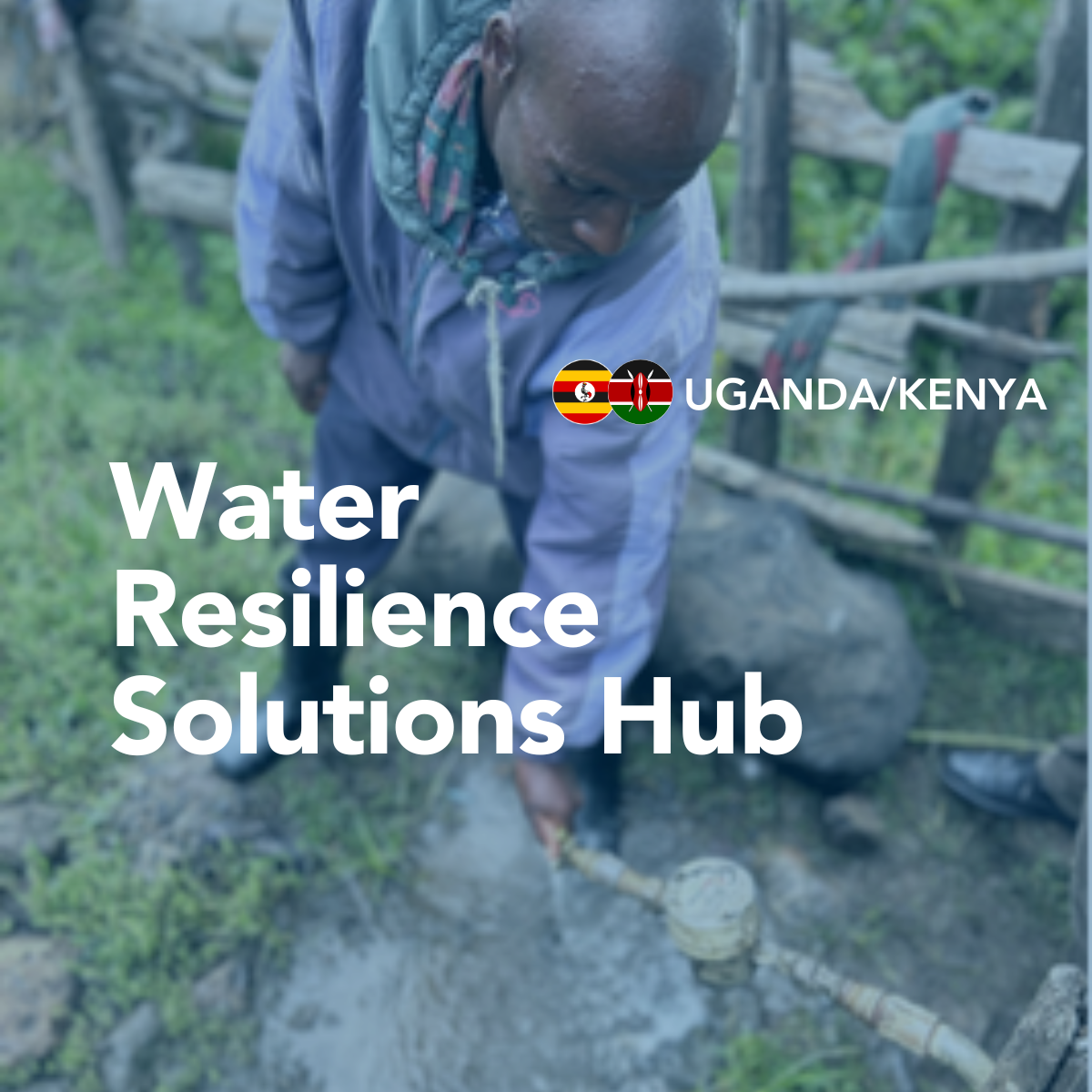
The Water Resilience Solutions Hub (WRSH) is the structured bridge between the two. Funded by Siemens Stiftung, the Conrad N. Hilton Foundation, the Shockwave Foundation and The One Foundation, and implemented by cewas, OPERO Services and seecon impact, WRSH strengthens the climate resilience of water operators in Kenya and Uganda. It brings together utilities and enterprises to diagnose climate risks, co-design practical pilots and turn successful results into long-term public-private collaborations. The programme runs until May 2028.
The challenge
Climate change is putting growing pressure on water supply systems:
• Flooding and contamination: wastewater overflows contaminate drinking water sources, and sediments damage equipment.
• Water quality: higher temperatures drive algal blooms, sedimentation and a decline in raw water quality.
• Source effects: changing rainfall patterns reduce the water available to service providers.
• Rising energy costs: lower water levels at extraction points increase pumping costs and energy bills.
• Infrastructure damage: heavy rains and landslides repeatedly damage water infrastructure.
• Non-revenue water: rising demand combined with high water losses makes climate-driven scarcity worse.
How WRSH works
WRSH offers a repeatable, end-to-end pathway from shared problem diagnosis to lasting partnerships:
1. Climate risk assessment: together with each participating utility, WRSH carries out a participatory climate risk assessment to identify the most pressing challenges in its specific operational context and to distinguish climate symptoms from their root causes.
2. Matchmaking: through an open call, WRSH identifies and vets WASH enterprises whose proven solutions respond to the utilities' priorities.
3. Co-design: utilities and enterprises meet in co-creation workshops and receive coaching to jointly design pilot initiatives that fit the utility's needs and capacities.
4. Piloting with catalytic finance: each selected pilot receives US$20,000 in catalytic financing to test the solution at operational scale, with systematic monitoring and documentation of results.
5. Partnership and scale-up: WRSH supports utilities and enterprises to formalise successful pilots into durable public-private collaborations with clear, validated terms, and to unlock follow-on financing.
Throughout the process, the implementing partners act as neutral facilitators and honest brokers. This reduces transaction costs and helps build the trust and mutual understanding that often stand in the way of utilities adopting private-sector solutions.
What WRSH offers
For water operators
• A structured climate risk assessment tailored to their operational context
• Pre-vetted access to relevant WASH enterprises, without procurement guesswork
• Catalytic financing for pilots, reducing the risk of investing in new solutions
• Support to formalise durable public-private partnerships
• Capacity building on public-private partnership frameworks, procurement and performance-based contracting
For WASH enterprises
• Facilitated access to utility decision-makers
• A co-designed, funded pilot to validate their solution at operational scale
• Systematic monitoring and documentation to build an investable evidence base
• Business case development and support to unlock follow-on financing
• Visibility for their results across the East African WASH ecosystem
Beyond one-off sales
WRSH focuses on collaborations in which enterprises take on genuine, ongoing operational responsibility, rather than one-off supply or installation contracts. Possible models include treatment as a service, monitoring and data as a service, performance-based network management, build-operate-transfer arrangements and delegated maintenance. In each case, utilities gain reliable performance and capacity without heavy upfront investment, while enterprises build stable, long-term business relationships.
Solutions may address areas such as decentralised wastewater treatment and reuse, water treatment optimisation, water system monitoring and data services, non-revenue water management, source development and aquifer recharge, faecal sludge management and treatment plant automation.
Who is involved
Participating utilities (first call): Gatundu Water and Sanitation Company (GATWASCO), Limuru Water and Sanitation Company (LWSC), Kisii Water and Sanitation Company (KWASCO) and Kericho Water and Sanitation Company (KEWASCO), Kenya.
Implementing partners: cewas, OPERO Services and seecon impact.
Funders: Siemens Stiftung, Conrad N. Hilton Foundation, Shockwave Foundation and The One Foundation.
Learn more: wrsh.creation.camp